Skip to airway content Airway of the MonthReview the case. Understand the airway. Build the skill.

Plateau Pressure by Ventilator

Vent control

Plateau pressure

Pplateau estimates end-inspiratory/static pressure when flow is at or near zero. The measurement method depends on the ventilator.

Peak and plateau relationship
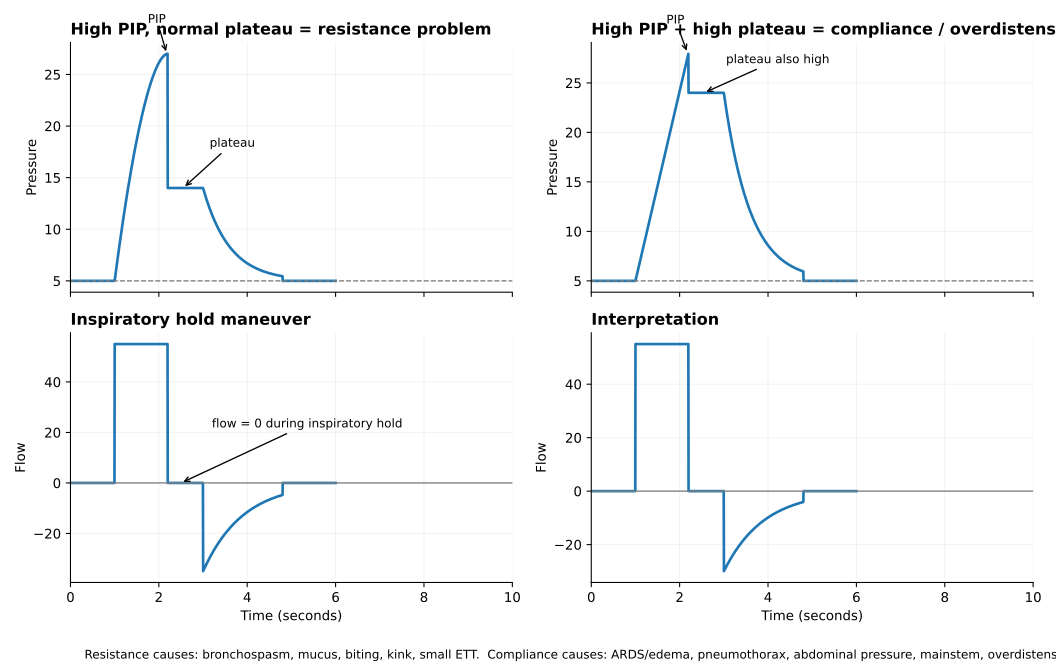
Peak airway pressure and plateau pressure teaching diagram

A valid plateau value requires end-inspiratory flow at or near zero. How that is obtained differs by ventilator.

Ventilator-specific measurement

  • On ventilators that support a true end-inspiratory occlusion, an inspiratory hold may be used when the patient is passive or sufficiently synchronous and there is no major leak.
  • On HAMILTON-T1/C1/MR1, use the displayed Pplateau and verify end-inspiratory flow is near zero; a conventional inspiratory hold is not available.
  • Use RT and the device operator’s manual when the interface or software differs.

Pitfalls

  • Active effort, coughing, dyssynchrony, ongoing inspiratory flow, or a major leak can make Pplateau inaccurate.
  • A high peak pressure alone cannot reliably distinguish resistance from reduced compliance.
Sources and device methodGeneral pressure teaching and HAMILTON-T1 guidance
About this resource
Website creator: Kyle Brown, MD Airway educational contributors: Andrew Pirotte, MD; Kyle Brown, MD; Reba Hodge, MD; Amanda Vanderwerf, PharmD, BCEMP; Morgan Kimball, PharmD, BCEMP; Joshua Mohess Clinical review: Emergency medicine faculty review completed. Medication content reviewed by Amanda Vanderwerf, PharmD, BCEMP, and Morgan Kimball, PharmD, BCEMP. Last reviewed: 2026-07-23 Next scheduled review: 2027-01-23 Designed for: EM residents, emergency physicians, EMS clinicians, airway educators, and simulation faculty Important: Educational resource and clinical-reference guide only; not a bedside order set or substitute for local protocol, medical direction, or clinical judgment. Website contact: [email protected]