Ppeak rises; Pplateau changes little
Increased resistance or flow-related pressure is more likely.
Open resistance branch Airway of the MonthReview the case. Understand the airway. Build the skill.
HAMILTON-T1
The T1 reports pressure mechanics differently from ventilators that use a conventional inspiratory-hold occlusion.
T1 distinction: Because the C1/T1/MR1 platform uses valveless pneumatics, a conventional inspiratory-hold maneuver cannot be used to obtain Pplateau. Use the displayed monitored values and confirm that end-inspiratory flow is at or near zero.
Check the unit: Button paths below were verified against the U.S. software 3.0.x manual. On the ventilator, open System → Info to confirm its software version and installed options.
Do not substitute the Manual Breath key. Pressing and holding Manual Breath prolongs inspiration; it is not the conventional inspiratory occlusion used to measure plateau pressure.
The website shows the formula but does not calculate a patient-specific result.
Increased resistance or flow-related pressure is more likely.
Open resistance branchReduced compliance, greater alveolar pressure, or overdistension is more likely.
Open compliance branch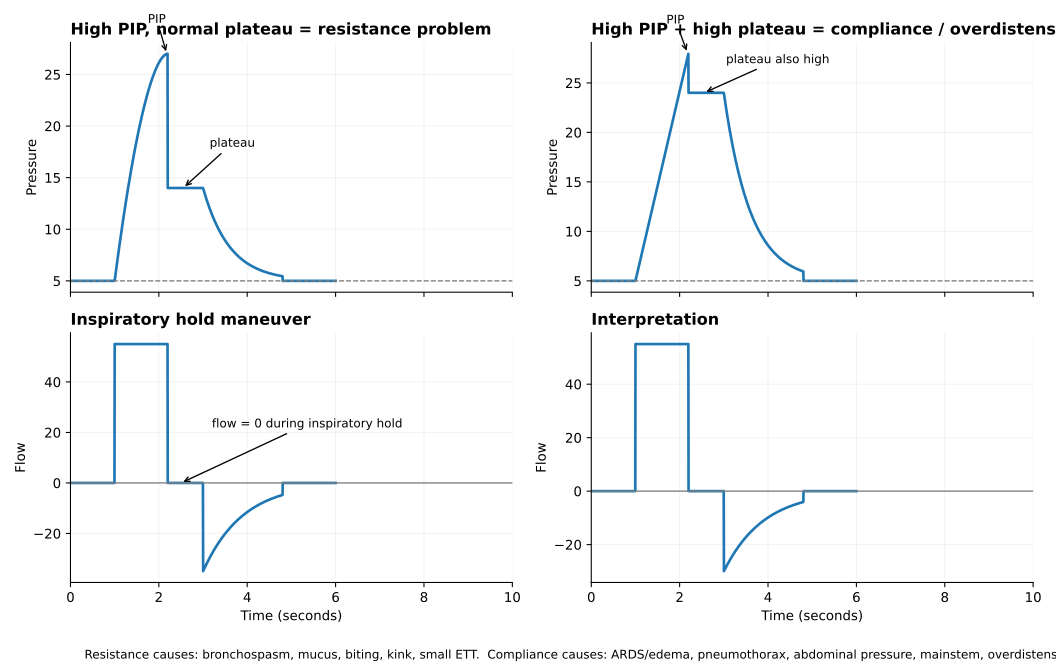
Button paths and monitored-parameter descriptions were checked against the HAMILTON-T1 U.S. operator’s manual for software 3.0.x. Hamilton currently advertises newer 3.1.x software, so labels, enabled options, and available functions may differ on the unit in front of you.
Important: Earlier T1 software may display an end-inspiratory pressure even when flow is still present; newer versions display Pplateau only when end-inspiratory flow is close to zero. Even then, the displayed value can be higher than true static plateau pressure.
Content check: 2026-09-10. Confirm the installed software under System → Info and follow local respiratory-therapy and institutional policy.