Flow-starvation pattern
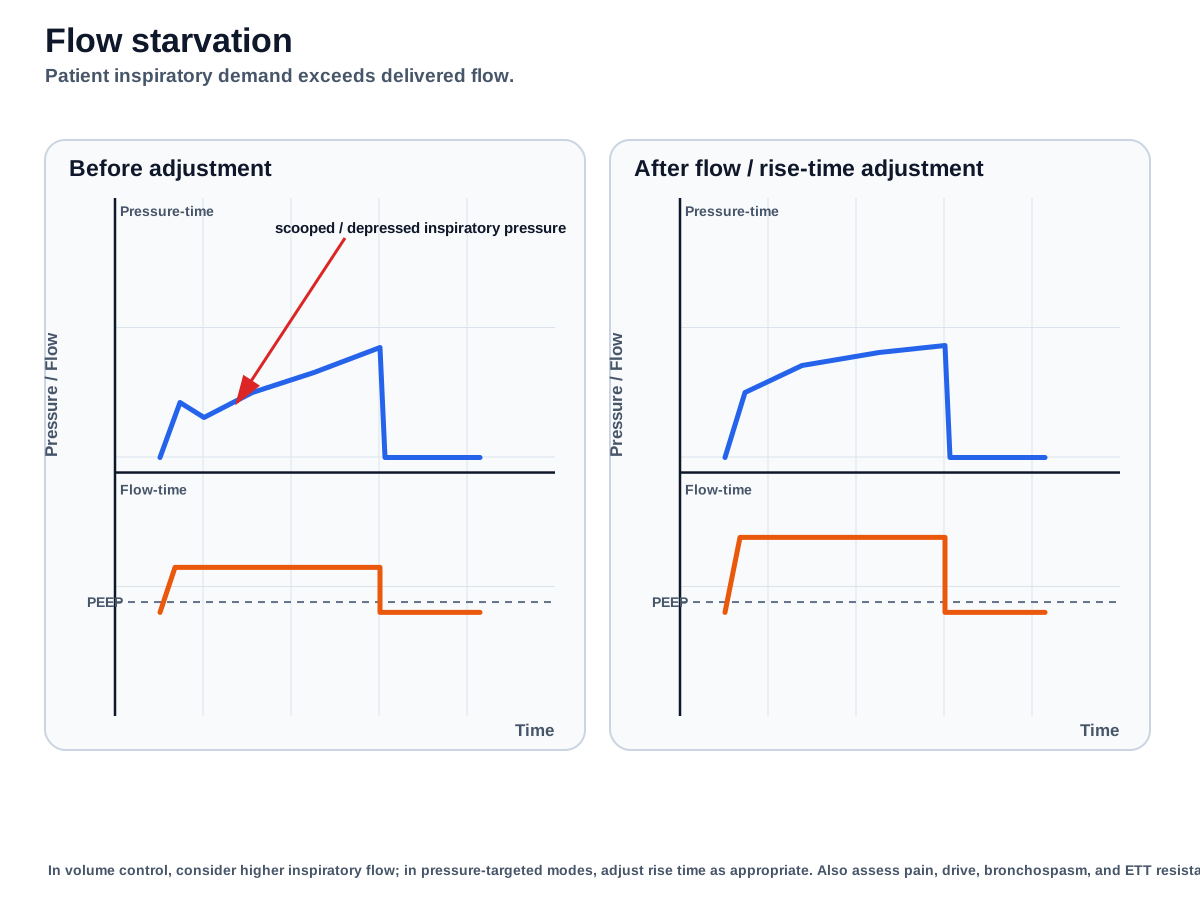
The pressure curve is pulled downward during inspiration and improves after flow/rise-time adjustment.
 Airway of the MonthReview the case. Understand the airway. Build the skill.
Vent control
The patient’s inspiratory demand exceeds the delivered flow; the pressure trace may show a concave or scooped inspiratory segment.
The pressure curve is pulled downward during inspiration and improves after flow/rise-time adjustment.
Original Airway of the Month teaching diagrams redrawn from standard ventilator scalar and loop conventions. Interpretation is anchored to the AARC 2024 Patient–Ventilator Assessment guideline, the peer-reviewed Basics of Ventilator Waveforms review, the 2026 SYNAPsE asynchrony consensus, and the University of Pennsylvania Ventilator Overview and Troubleshooting tip sheet. Waveforms are pattern-recognition aids, not diagnoses; display colors, labels, and orientation vary by ventilator brand.
Evidence and use limits
Last reviewed: 2026-07-17. Designed for: emergency medicine learners, clinicians, EMS, RT, and airway educators.
This is an educational clinical reference, not a bedside order set. Confirm medications, ventilator changes, pediatric dosing, procedures, and escalation decisions against the patient’s physiology, the ventilator in use, and local ED/ICU/anesthesia/pharmacy/RT/EMS/pediatric policy.
Full references · Editorial policy · AARC 2024 ventilator assessment · ATS/ESICM/SCCM lung-protective ventilation · ATS 2024 ARDS update