Skip to airway content Airway of the MonthReview the case. Understand the airway. Build the skill.

Total PEEP and AutoPEEP Measurement

Vent control

Total PEEP and AutoPEEP measurement methods

Some ventilators use an end-expiratory hold; the HAMILTON-T1 instead reports a calculated AutoPEEP monitored value. Use the method supported by the ventilator in front of you.

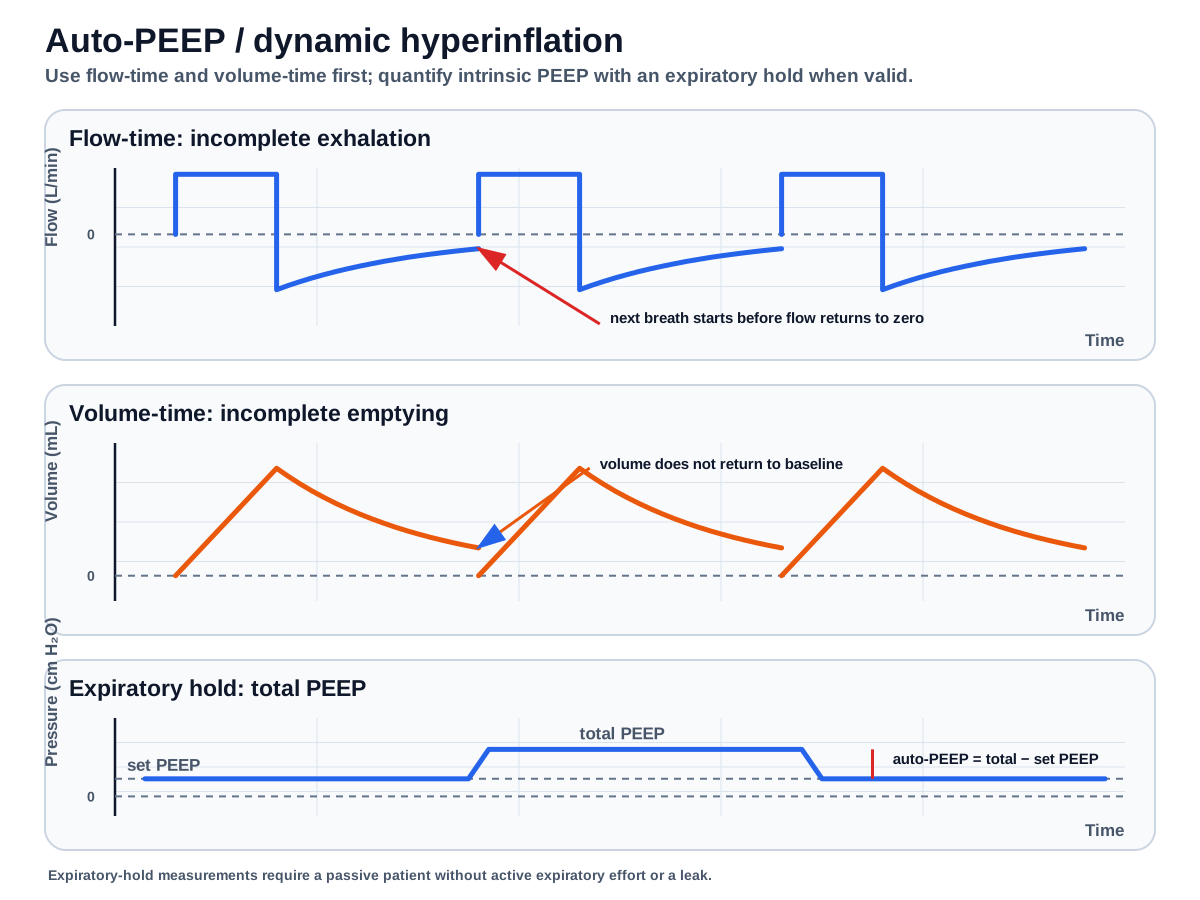
Flow-time clue

Flow-time waveform showing incomplete exhalation

Expiratory flow that does not return to zero before the next inspiration supports dynamic hyperinflation.

Ventilators with an expiratory-hold function

  • Use the device-specific end-expiratory hold only when the patient is passive and the circuit is adequately sealed.
  • Total PEEP minus set PEEP estimates intrinsic PEEP.
  • Active expiratory effort or a substantial leak can invalidate the maneuver.

HAMILTON-T1

  • Display the flow-time waveform.
  • Open Monitoring → General and find the calculated AutoPEEP value.
  • Interpret the number with effort, leak, mode, waveform, and hemodynamics.
Open T1 instructions
Sources and device methodAutoPEEP measurement is ventilator-specific
About this resource
Website creator: Kyle Brown, MD Airway educational contributors: Andrew Pirotte, MD; Kyle Brown, MD; Reba Hodge, MD; Amanda Vanderwerf, PharmD, BCEMP; Morgan Kimball, PharmD, BCEMP; Joshua Mohess Clinical review: Emergency medicine faculty review completed. Medication content reviewed by Amanda Vanderwerf, PharmD, BCEMP, and Morgan Kimball, PharmD, BCEMP. Last reviewed: 2026-07-23 Next scheduled review: 2027-01-23 Designed for: EM residents, emergency physicians, EMS clinicians, airway educators, and simulation faculty Important: Educational resource and clinical-reference guide only; not a bedside order set or substitute for local protocol, medical direction, or clinical judgment. Website contact: [email protected]