Flow, volume, and expiratory-hold clues
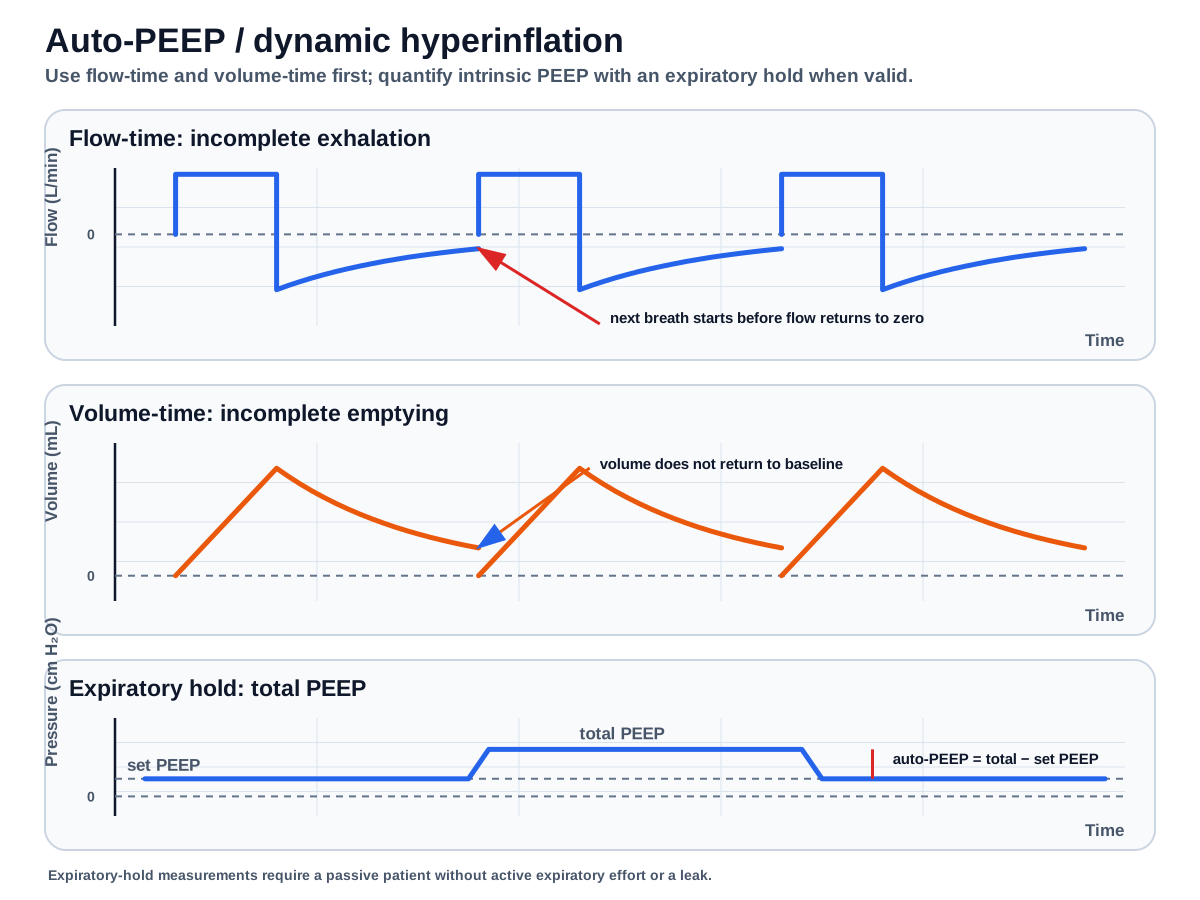
The pressure-time trace usually returns to set PEEP; intrinsic PEEP measurement is ventilator-specific; pair the supported measurement method with the flow-time waveform.
 Airway of the MonthReview the case. Understand the airway. Build the skill.
Vent control
The best bedside clue is expiratory flow that has not returned to zero before the next breath starts.
The pressure-time trace usually returns to set PEEP; intrinsic PEEP measurement is ventilator-specific; pair the supported measurement method with the flow-time waveform.
Original Airway of the Month teaching diagrams redrawn from standard ventilator scalar and loop conventions. Interpretation is anchored to the AARC 2024 Patient–Ventilator Assessment guideline, the peer-reviewed Basics of Ventilator Waveforms review, the 2026 SYNAPsE asynchrony consensus, and the University of Pennsylvania Ventilator Overview and Troubleshooting tip sheet. Waveforms are pattern-recognition aids, not diagnoses; display colors, labels, and orientation vary by ventilator brand.
Evidence and use limits
Last reviewed: 2026-07-17. Designed for: emergency medicine learners, clinicians, EMS, RT, and airway educators.
This is an educational clinical reference, not a bedside order set. Confirm medications, ventilator changes, pediatric dosing, procedures, and escalation decisions against the patient’s physiology, the ventilator in use, and local ED/ICU/anesthesia/pharmacy/RT/EMS/pediatric policy.
Full references · Editorial policy · AARC 2024 ventilator assessment · ATS/ESICM/SCCM lung-protective ventilation · ATS 2024 ARDS update